Hans Kalliwoda

intervention artist · conceptual thinker · experimental doer

Transdisciplinary, socially engaged, and ecological in scope, the work spans mobile international projects, embodied installations, and urban interventions.

Art that activates bodies, environments, and communities — expanding perceptual and conceptual frameworks through immersive participation, cross-cultural dialogue, and systemic inquiry.

Since the 1980s, suspended paintings and multi-dimensional environments formed the basis of an ongoing inquiry into embodied experience and energy exchange. Rather than positioning the viewer as a distant observer, these works invite entry, movement, and duration — treating space, colour, and rhythm as carriers of lived sensation.

This approach expanded through long-term, mobile, and site-specific interventions such as Europartrain, Polliniferous, World in a Shell, Future Pollination Lab, and BeeTotems for RefuBees. Across these initiatives, art functions as a catalyst rather than an endpoint: a framework for collaboration, knowledge exchange, and collective experimentation.

“Good art inspires, brilliant art brings about changes”.

Current Urban Interventions: BeeTotems for RefuBees

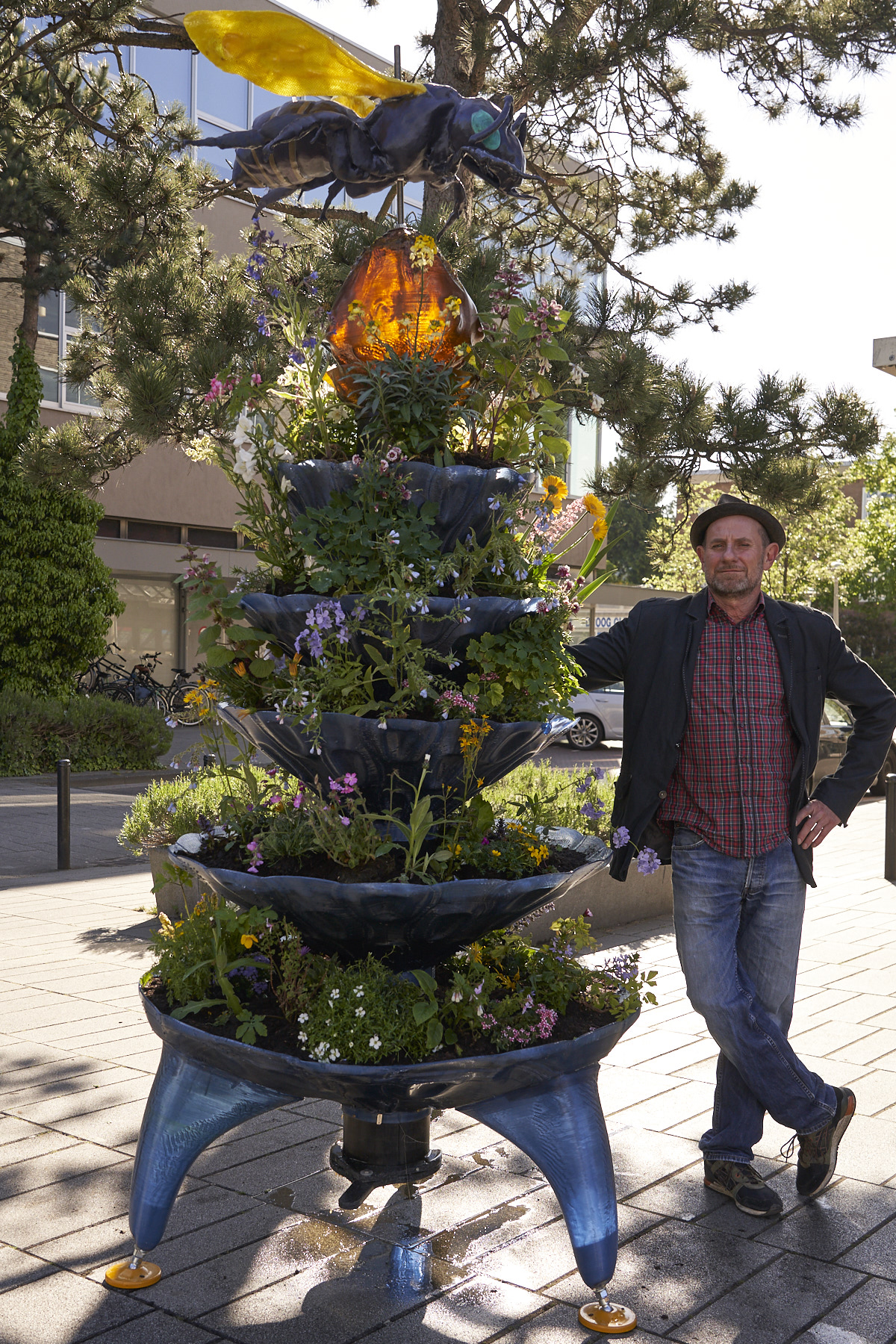
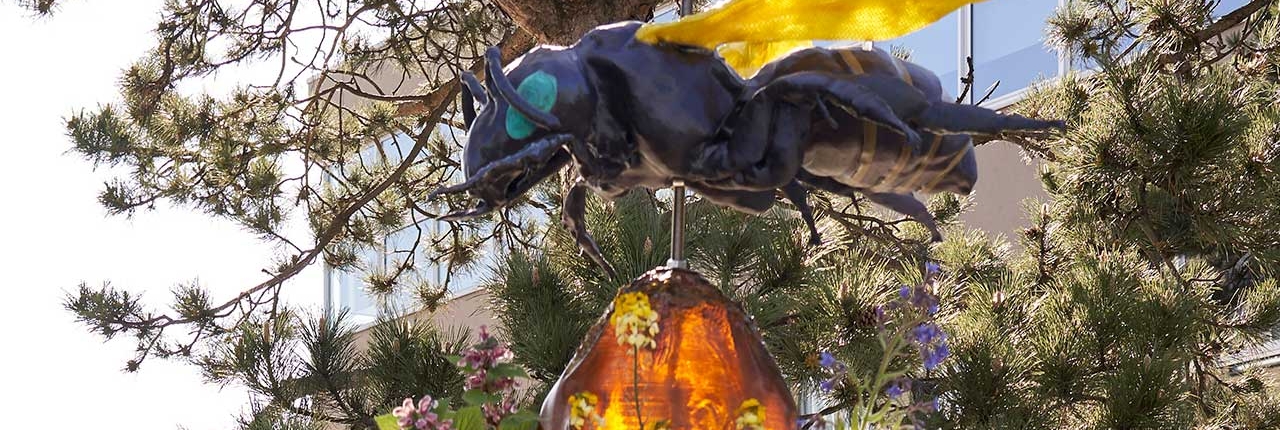
BeeTotems for RefuBees is an ongoing social-ecological art/science project that transforms urban neighbourhoods into temporary nature reserves for indigenous pollinators. Developed as action research with researchers, specialists, students, each BeeTotem operates as a living social sculpture — simultaneously providing ecological infrastructure, research platforms, and public meeting points.

The Frontrunner video below (produced by and screened at De Balie, Amsterdam) portrays Hans Kalliwoda and the BeeTotems for RefuBees during the symposium The City as Nature Reserve (June 2023), offering an introduction to the project’s methodology, motivations, and social impact.

Recent work continues a long-term inquiry into ecological and social systems through site-specific urban interventions. It focuses on transforming city spaces into customised habitats for pollinators while engaging communities, researchers, and students in participatory ecological research.

These interventions operate at the intersection of art, science, and civic engagement. Each installation functions as a living social sculpture, offering a framework to explore sustainability, biodiversity, and collective responsibility. Residents are invited to observe, interact, and contribute, creating a direct feedback loop between environment, community, and artistic practice.

Through interventions and social-ecological research, these projects explore embodied learning, shared responsibility, and the potential of art to catalyse systemic change.

Art in Public Space — Social Sculpture as Methodology

From the mid-1990s onward, public space became a primary medium through which artistic research could unfold over time. Rather than treating the city as a backdrop for display, projects were conceived as social sculptures: temporary systems that activate movement, encounter, and shared responsibility.

Europartrain (1995–2001) marked a decisive shift. By transforming train stations across Europe into sites of artistic production and exchange, the project mobilised infrastructure itself as an exhibition space. Artists, curators, and local publics encountered one another in transit, turning mobility, borders, and logistics into artistic material.

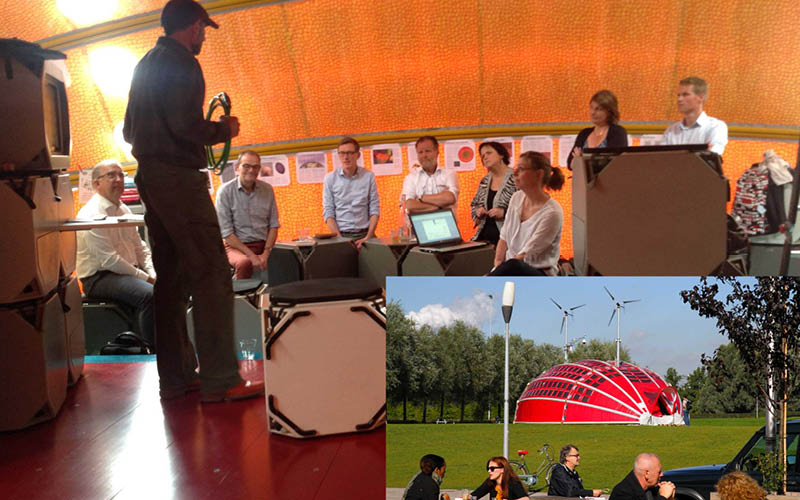
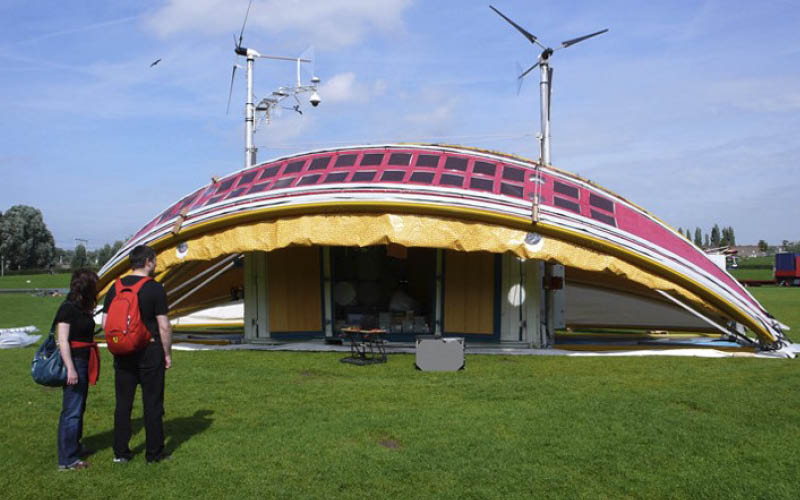
This approach was further developed through The Polliniferous Project / World in a Shell (2000–2010), initiated within academic and semi-public contexts such as TU Delft. Here, long-term artistic interventions operated as research environments rather than visitor attractions, fostering interdisciplinary collaboration between students, engineers, designers, and external specialists. Sustainability, housing, and ecological thinking became shared fields of inquiry, well ahead of their mainstream adoption.

Contemporary projects such as BeeTotems for RefuBees extend this lineage into the urban neighbourhood. Installed in public and semi-public spaces, each BeeTotem functions as both ecological infrastructure and social catalyst. Together, these works articulate public space not as a site of consumption, but as a living laboratory where artistic practice, ecological urgency, and civic engagement converge.

Totemism — Embodied Meaning and Collective Intelligence

Totemism functions here not as a belief system or symbolic tradition, but as a working model for how meaning, responsibility, and belonging are collectively produced. A totem operates as a shared point of orientation: something external, visible, and materially present through which a group can recognise itself.

Within contemporary society, characterised by hyper-individualism, acceleration and abstraction, such shared reference points have largely dissolved. Totemic structures reintroduce a moment of pause. They slow movement, invite proximity, and create a temporary centre around which dialogue, reflection, and participation can occur.

Across installations, interventions, and performative social sculptures, totemic form becomes a tool for embodied thinking. Participation is not symbolic but physical: standing together, contributing material presence, or sharing attention. Meaning emerges through collective action rather than representation.

In projects such as the Totem of Togetherness and BeeTotems for RefuBees, the totem operates simultaneously on multiple levels: ecological marker, social trigger, and philosophical proposition. It makes visible what is otherwise abstract: interdependence, shared agency, swarm intelligence by grounding these ideas in lived, spatial experience and interactions.

Totemism, in this sense, provides a methodology for working with complexity. It allows art to function not as commentary, but as a stabilising structure within which communities, disciplines, and non-human systems can momentarily align.

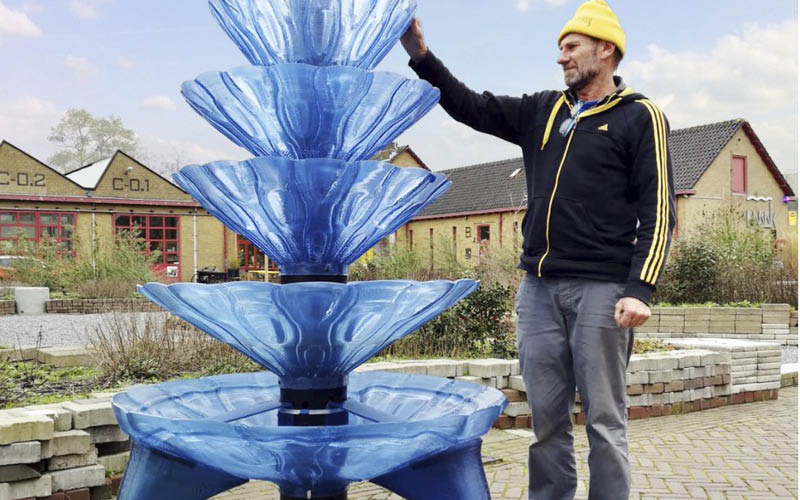
Foto: Ernst van Deursen

BeeTotems – Research Through Living Social Sculpture

BeeTotems for RefuBees is a long-term artistic research project that transforms urban neighbourhoods into experimental habitats for wild pollinators. Each BeeTotem functions as a living social sculpture: simultaneously ecological infrastructure, public intervention, and research interface.

Rather than offering symbolic representation, BeeTotems operate as performative systems embedded in real environments. Designed in collaboration with ecologists, urban specialists, and educational institutions, the structures support specific indigenous bee species while generating site-based knowledge about biodiversity, soil, plant selection, and human–non-human interaction.

The project introduces a localised approach to a global ecological crisis. By working at the scale of streets, balconies, schools, and neighbourhoods, BeeTotems translate abstract sustainability discourse into tangible, participatory practice. Residents, students, and professionals become active contributors—observing, maintaining, and learning through direct engagement.

As an artistic methodology, BeeTotems integrates ecological research, community involvement, and embodied learning. It reframes public space as a shared responsibility and positions art as a catalyst for regenerative thinking, where ecological awareness emerges through lived experience rather than instruction.

BeeTotems for RefuBees extends earlier investigations into autonomy, systems, and collective intelligence, offering a scalable model for future urban ecologies rooted in cooperation, care, and continuity.

BeeTotems transforms urban neighbourhoods into participatory ecological laboratories, fostering biodiversity, community engagement, and systemic environmental awareness through art as living social sculpture.

BIO

Hans Kalliwoda is a transdisciplinary artist, researcher, and social-ecological interventionist whose work has spanned immersive installation, mobile international projects, and experimental ecological systems since the 1980s. The practice explores how art can activate bodies, environments, and communities, shifting perception through physical participation, cross-cultural exchange, and systemic thinking. Early explorations with suspended paintings in multi-dimensional installations established a lifelong inquiry into embodied experience and energy exchange.

In the mid-1980s, extended bicycle travels across Africa profoundly shaped the approach to sensory, rhythmic, and communal expression. These experiences led to the development of large-scale suspended works and immersive environments, designed to be entered, felt, and physically experienced rather than observed at a distance. Colour, form, and spatial perception operate as carriers of lived sensation, inviting viewers into an embodied dialogue with the work.

Following the Fourth Dimension installations in New York, London, and Sunny Side Up in Amsterdam, the early 1990s saw an intense rhythm of international exhibitions, with constantly emerging new works. Yet the acceleration highlighted a tension between rapid production and the slower, attentive sensibility cultivated through prior travel and lived experience. Stepping back from gallery dependency and supported by the Blindpainters Foundation, the practice shifted toward long-term, self-determined trajectories, moving from discrete works to interconnected systems, and from episodic exhibition to sustained research and engagement.

Europartrain (1995–2001) transformed trains into mobile cultural platforms, enabling cross-pollination of artistic ideas, local identities, and collaborative practices across Europe. The Polliniferous Project / World in a Shell (2000–2010) developed semi-public interventions at universities and collaborative labs, exploring sustainability, systemic thinking, and community-based ecological concepts. The Pollination Lab extended these themes into experimental urban interventions, linking ecological observation, community participation, and collaborative methodologies.

Between 2013 and 2017, the practice expanded into academic research, with a PhDc. Art Researcher role (external PhD) at Leiden University. Leveraging extensive curatorial experience, innovative modes of mediation were developed to re-envision exhibition practices for contemporary society. As co-director of the TuDelft Urban Ecology and Ecocities Lab, international collaborations with academics and specialists continue to devise novel methodologies for transforming urban centres into nature reserves for wild pollinators.

BeeTotems for RefuBees (2018–present) translates these investigations into urban neighborhoods, creating temporary habitats for indigenous bee species while fostering ecological literacy and social cohesion. Performative dimensions culminate in the BeeCircus and in the Totem of Togetherness, a social sculpture and participatory reflection on collective action, interdependence, and shared futures, carrying philosophical, spiritual, and metaphysical resonance.

Across these projects, the work consistently investigates how art can serve as a medium for regeneration, interconnectedness, and transformative participation, merging ecological, social, and cultural inquiry in a single, evolving practice.

Key Projects & Interventions

Europartrain (1995–2001) – Mobile international installations at European train stations; cross-cultural collaboration and public engagement in transit spaces.

Polliniferous / World in a Shell (2000–2010) – Multi-year university and site-specific research/art project. Explored sustainable housing, interdisciplinary collaboration, and ecological design with students, mentors, and specialists.

Pollination Lab (2010–2018) – Urban ecological experimentation integrating workshops, public participation, and scientific research to develop performative ecological strategies.

BeeTotems for RefuBees (2018–present) – Temporary urban habitats for indigenous pollinators. Combines social sculpture, citizen science, and ecological activism to foster community and systemic change.

Totem of Togetherness – Participatory social sculpture exploring collective responsibility, hyper-individualism, and community cohesion.


Immersive Installations & Exhibitions

  • Fourth Dimension, New York & London (1989/1990) – Suspended multi-dimensional painting environments; embodied perception.

  • Sunny Side Up, Amsterdam (1992) – Physical participation in visual installations; precursor to immersive ecological projects.

  • Selected international exhibitions (1992–1995) – Rapidly evolving suspended and participatory works.


Academic & Research Engagement

  • PhDc Art Researcher (ext.), Leiden University (2013–2017) – Developed innovative exhibition mediation and interdisciplinary research methods.

  • Co-Director, TU Delft Urban Ecology & Ecocities Lab – Urban pollinator interventions, participatory ecological research.


Awards & Recognition

  • National and international grants and residencies supporting ecological and socially-engaged projects.

  • Endorsed by curators, foundations, and contemporary Maecenases.


Knowledge transfer

Symposiums & Conferences

Participation in international symposiums and conferences has allowed Kalliwoda to explore cross-cultural dialogue and systemic ecological strategies. Recent highlights include Project Anywhere at Parsons The New School (NY), University of Newcastle (Australia), and other platforms bridging art, research, and urban ecology.

Lectures & Keynotes

Kalliwoda has delivered keynote talks and masterclasses on immersive art, interspecies methodology, and socially engaged practice. Invited institutions range from universities to contemporary art institutes and cultural festivals, providing inspiration to emerging curators, artists, and patrons alike.

Workshops & Community Projects

Hands-on workshops form a core component of Kalliwoda’s methodology. These include collaborative installations, bee-friendly urban interventions (RefuBees), and mobility-based projects that combine ecological, social, and artistic research.

Projects

Videos

It’s the most beautiful day, today

Europartrain

Art, architecture, science

Adopting to climate change

Understanding polliniferoused 01

Understanding polliniferoused 02